Quick Answer: The most common reason a tankless unit cycles off and on is unstable water flow or a safety sensor detecting a problem. Low flow (below the activation threshold), clogged inlet filters, scale buildup, venting/combustion air restrictions, gas pressure fluctuations, or power issues can trigger protective shutdowns and restarts. Start by checking flow rate, cleaning the inlet water filter, confirming gas and power stability, and clearing vent obstructions. If you see repeated error codes, smell gas, or suspect overheating, stop troubleshooting and get qualified help.
What “Turning Off and On” Really Means in a Tankless Heater
When homeowners ask why does my tankless water heater keep turning off, they’re usually describing one of two things:
- True safety shutdowns: the unit stops heating because a sensor detects risk (overheating protection, blocked exhaust vent, flame failure, etc.).
- Short cycling: the unit keeps re-igniting because water flow or temperature demand is bouncing.
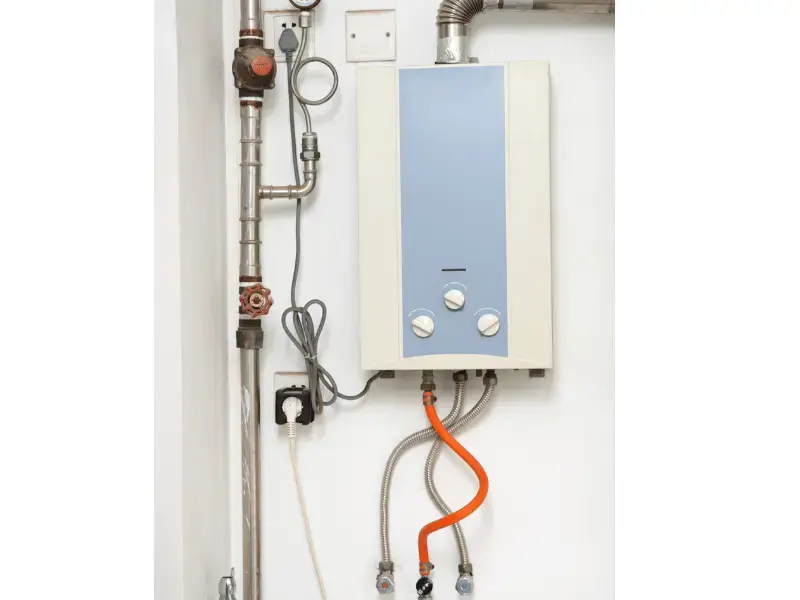
A tankless heater heats water “on demand.” When a hot tap opens, cold water enters, a flow sensor detects movement, and the control board tells the unit to ignite a gas burner (or energize electric heating elements) so water can pass through the heat exchanger and exit hot. If any component in that chain falls out of range, the unit may shut down, then retry making it feel like it’s “turning off and on.”
Fast Safety Check Before You Troubleshoot
Before anything else:
- If you smell gas (or hear hissing): treat it as a gas leak risk and leave the area.
- If you feel dizzy, nauseated, or the unit is in a tight space: suspect carbon monoxide buildup.
- If you see water dripping from the unit: stop and address the leak.
These aren’t “DIY-and-see” situations.
The Most Common Triggers Behind Cycling
If you’re wondering why my tankless water heater keeps turning off, these are the top causes that show up again and again.
Tankless units typically need a minimum flow rate threshold to stay running. Many units activate around 0.5–0.75 GPM (activation range). If your shower valve, faucet, or mixing setting dips below that, the heater may shut off, then reignite when flow rises again.
What it looks like:
- Hot water is fine for a moment, then goes cool, then returns.
- Cycling happens more with low-flow fixtures (showerheads/faucets).
- It worsens when someone else uses water.
Quick fix (try now): Open the hot side a bit more to stabilize flow. If the unit stays on at higher flow, you’ve found a likely root cause.
A Simple “Flow Stability” Test You Can Do in 2 Minutes
Here’s a fast, practical way to confirm flow-related cycling.
- Turn on a hot faucet fully (kitchen sink is best).
- Let it run for 60 seconds.
- Slowly reduce flow until you notice cycling.
- Note the point where it shuts off.
If cycling starts as you reduce flow, that’s a strong sign you’re dealing with low-flow activation problems, one of the most common answers to why does my tankless water heater keep turning off.
Check the Inlet Filter and Water Path First
Many tankless units have a clogged inlet water filter / filter screen that catches debris before it hits internal components. When it plugs, your flow drops and the unit can’t maintain stable operation.
Quick fix: Turn off power to the unit, close water valves, remove and rinse the filter screen, reinstall, and restore water/power.
Tip: If you’re also maintaining a standard tank unit elsewhere, some homeowners confuse steps this is not the same as how you flush sediment from water heater tanks, but it’s still a critical maintenance move for tankless flow reliability.
Scale and Hard Water Can Cause Overheating Shutdowns
If your water is hard, hard water minerals (calcium & magnesium) can deposit inside the heat exchanger. That creates scale buildup / descaling (flushing with vinegar) territory: scale narrows passages, reduces heat transfer efficiency, and can cause overheating.
That’s where cycling becomes: heat spikes → safety trip → restart → repeat.
This is often described as the water heater gets too hot then shuts off.
Signs:
- Temperature swings during a shower
- Reduced flow at hot side
- Popping/rumbling noises
- Overheat-related error codes
Quick fix: If you’re comfortable and your manufacturer allows it, do a proper descaling flush. If not, schedule maintenance scale is one of the most expensive “ignore-it” issues.
Symptoms → Likely Cause → Quick Action
Symptom you Notice | Likely Cause | Quick Action to Try |
Turns off when you reduce faucet flow | Minimum flow issue | Increase flow; check aerators/low-flow fixtures |
Random shutdowns during normal use | Gas pressure fluctuations or power dips | Check other appliances starting; check power stability |
Stops after a few minutes, then restarts | Overheating protection / venting | Inspect intake/exhaust vents; lower set temp 10–15°F |
Error code appears repeatedly | Sensor trip or component fault | Record code; reset; if returns, get diagnosis |
Works at one faucet but not another | Local restriction | Clean aerator; check mixing valve |
Gas Supply Problems Can Interrupt Combustion
For gas units, consistent fuel delivery matters. Cycling can happen if there are gas pressure fluctuations, low gas pressure, or an intermittent supply issue.
Common culprits include:
- gas valve not fully open
- undersized gas lines
- faulty gas regulator
- air in gas lines
If the burner can’t stay lit, you may see ignition failure or flame failure conditions. That’s one of the most direct explanations for why my tankless water heater keeps turning off.
What you might observe:
- Delayed ignition
- Yellow flame instead of strong blue
- Unit shuts down when another gas appliance starts
Venting and Combustion Air Problems Trigger Safety Shutdowns
Tankless gas units need proper airflow and exhaust routing. If the air intake (combustion air) is restricted or the exhaust vent can’t clear gases, the system shuts down for safety.
Watch for:
- blocked vent / vent obstruction
- damaged or disconnected vent pipes
- debris, ice, or nests outside
- failing exhaust fan
This is one of the most important safety categories because it relates to carbon monoxide buildup risk.
Quick fix: Inspect the exterior termination and clear obvious obstructions. If the problem returns or you see corrosion/condensation issues, get professional inspection.
Electrical and Control Issues Can Cause On/Off Cycling
Even gas units rely on electronics. Cycling can happen due to:
- power fluctuations / brownouts
- power surges
- tripped circuit breaker
- a tripped GFCI outlet
- loose electrical connections
- corroded electrical contacts
If the board loses stable power, the control board can reset mid-demand and you’ll experience cycling.
This is especially relevant if you’re dealing with a tankless water heater not working after a power outage.
Quick fix: Reset breaker fully OFF → ON, reset any nearby GFCI, and see if error codes are clear. If breakers trip repeatedly, stop and call a qualified tech. In some cases, homeowners investigating shutdowns later realize the issue isn’t just cycling but a tankless water heater tripping breaker, which points to an electrical overload, wiring fault, or failing heating element rather than a simple flow or sensor issue. If that’s happening in your home, you may need to troubleshoot the electrical side more closely instead of focusing only on gas, venting, or water flow.
Ignition System Failures Create Repeated Start Attempts
Modern units use electronic ignition. If ignition fails, the unit may attempt multiple times then stop.
Components often involved:
- ignition system
- igniter
- flame rod
- flame sensor
- gas valve control
- air/fuel mixture control signals from the control board
Common symptoms:
- Clicking without successful ignition
- Short bursts of heat, then shutdown
- Recurring ignition-related error codes
At this point, cycling isn’t “just annoying” it can be a sign of combustion instability.
Sensor Malfunctions Can Create “False” Shutdowns
If the flow sensor sticks, gets debris, or drifts, it can send unstable “on/off” signals. A bad temperature sensor can misread heat exchanger temps and trip overheating protection.
When a unit thinks something is unsafe, it triggers:
- overheating protection
- thermal shutdown
- sometimes a thermal fuse
If you keep asking why my tankless water heater keeps turning off, and you’ve already stabilized flow and cleaned filters, sensors become a prime suspect.
“Cold Water Sandwich” vs True Shutdown
Some people think the heater is cycling, but it’s actually a normal tankless behavior called the cold water sandwich: brief hot water, then cool water in the line, then hot again.
You’re more likely dealing with cycling if:
- the unit display shows shutdown/error codes
- the burner indicator turns off and on repeatedly
- it happens continuously during steady use
How to Fix Tankless Hot Water Heater
Use this sequence so you don’t waste time:
- Reset the system (power off 30 seconds, then on).
- Check error codes and write them down.
- Clean the inlet filter and check flow.
- Inspect intake/exhaust terminations for blockages.
- Lower setpoint 10–15°F to reduce overheating trips.
- Check gas supply stability (valves open, other appliances).
- If cycling persists, test for ignition/sensor problems with a pro.
Tip: If your unit is older or you want brand-specific steps, keep your manual handy and ensure settings match your installation (gas type, venting configuration, altitude settings if applicable).
Tankless Not Working in Cold Weather
If tankless water heater not working in cold weather is your situation, you may be dealing with:
- frozen intake/exhaust termination
- frozen supply pipes (especially in garages/crawl spaces)
- freezing around condensate drains (condensing units)
Quick fix: Clear ice from outside vent terminations and gently thaw exposed pipes with safe heat (no open flame). If the unit itself froze, it may need inspection before restarting.
What to Do When Cycling Happens Mid-Shower
Scenario | What’s Happening | Best Immediate Move |
Someone starts laundry/dishwasher | Flow changes cause drop below threshold | Pause other hot water use; increase shower flow |
Unit runs 3–5 minutes then stops | Overheating protection likely | Lower temp setting; inspect vents; clean filter |
Unit restarts repeatedly with clicking | Ignition attempts failing | Check gas valve open; stop if gas smell; call tech |
After storm/power event | Control board reset/power instability | Reset breaker/GFCI; check error codes |
Quick Fixes You Can Try (Safely)
- Clean faucet/shower aerators to reduce restriction and stabilize flow
- Ensure shutoff valves are fully open (cold inlet and hot outlet)
- Check exterior vent terminations for debris, ice, or nests
- Lower the temperature setting slightly to prevent overheating trips
- Reset power properly after an outage (OFF → wait → ON)
When to Stop DIY and Call for Help
- You smell gas, hear hissing, or suspect a leak
- Repeated ignition failures or flame-related codes keep returning
- Breakers trip repeatedly or wiring looks damaged
- You see signs of overheating (burning smell, hot casing, scorch marks)
- Venting is damaged or disconnected
Maintenance That Prevents Cycling Long-Term
Cycling problems are often preventable. Regular maintenance improves safety and keeps the unit efficient.
Key habits:
- Clean inlet filter periodically (especially after plumbing work)
- Inspect intake/exhaust area seasonally
- Descale on schedule if you have hard water
- Watch for early changes in flow or temperature stability
If you want long-term reliability and you’re in the Upstate, having an affordable tankless water heater specialist review your setup once a year can prevent surprise shutdowns and extend the life of the system.
Local Factors That Make Cycling More Common
Real-world conditions can make cycling more likely:
- Hard water tendencies can accelerate scale in the heat exchanger
- Winter cold snaps can affect exterior vent terminations
- Older homes may have gas line sizing that wasn’t designed for tankless demand
- Power flickers during storms can upset sensitive control boards
If you’re seeing repeat issues and want a steady fix not just resets, talk to a local plumbing company that understands local conditions and common installation patterns in the Upstate.
Call Jacob’s Plumbing LLC for Reliable Tankless Help
If you’re tired of resets and your tankless water heater keeps cycling, Jacob’s Plumbing LLC can diagnose flow, venting, gas pressure, sensors, and electrical stability the right way so the fix lasts.
Call Jacob’s Plumbing LLC: 8643183285
FAQs About Tankless Water Heater Keep Turning Off
Why does my tankless water heater keep turning off during a shower?
It usually happens because the flow rate drops below the unit’s minimum threshold or a safety system detects overheating, venting, or combustion issues.
Why does my tankless water heater keep turning off and on at low flow?
Low flow can fall under the activation limit (often around 0.5 GPM), so the heater shuts down and reignites as flow changes.
What if my water heater gets too hot then shuts off?
That typically indicates overheating protection is triggering due to scale buildup, restricted flow, or venting/air intake issues.
Are hot water tankless problems usually maintenance-related?
Very often, yes dirty inlet filters, scaling, and vent obstructions are common and preventable.
Why is my tankless water heater not working after power outage?
Power dips can confuse electronics; resetting breaker/GFCI and checking error codes usually helps, but recurring issues can point to control board or electrical problems.
What’s the fastest way to diagnose why does my tankless water heater keep turning off?
Check flow first (fixtures/filters), then vents, then gas/power stability, then error codes because those four areas cause most cycling.