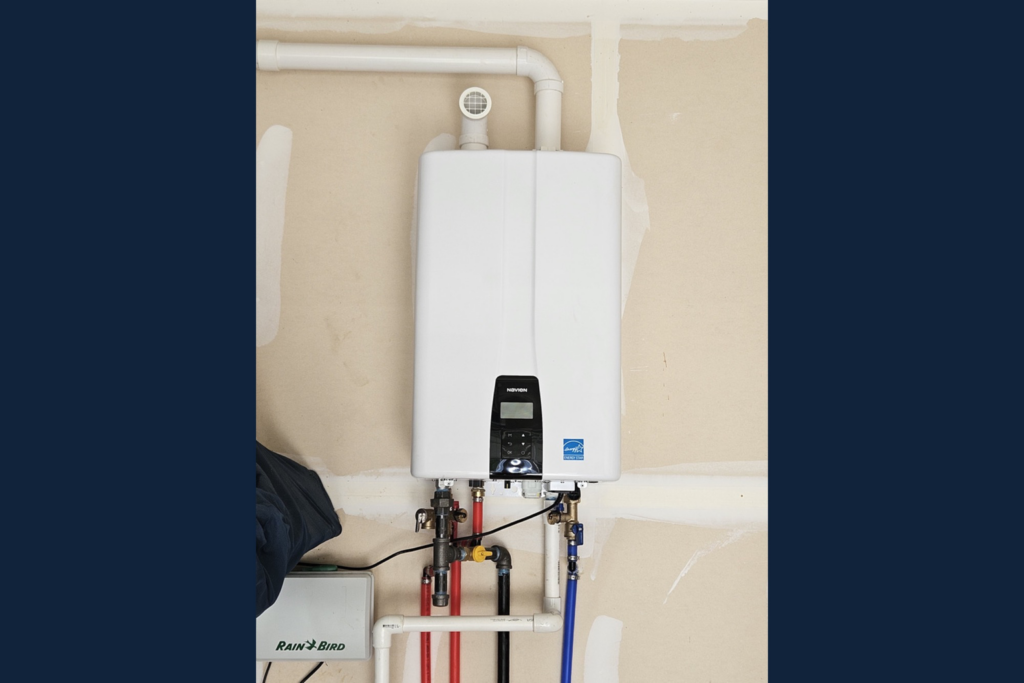
If one shower or faucet stays hot but the water turns cold or noticeably cooler when a second hot-water fixture starts, the tankless system may not be maintaining the temperature rise required for both uses at once. That can happen when total demand exceeds the system’s usable output, but restrictions, scale, utility-supply limits, installation conditions, or hot-and-cold mixing can create a similar pattern. The symptom alone does not prove that the heater is too small or that a particular part has failed.
One detail is especially useful: does the tankless unit appear to keep running while the water cools, or does it actually shut off, lose power, or show a code? A temperature drop while the display and burner remain active is different from a true shutdown. Record what you can see from a safe position, avoid changing equipment settings, and have the system evaluated before making a repair or replacement decision.
Focus on the Moment the Temperature Changes
The most helpful pattern starts with normal use. One hot-water fixture is running steadily, such as a shower, sink, or hot-water appliance. A second hot-water fixture begins operating, and the temperature at the first fixture drops. When the second fixture stops, the water may become hot again.
That sequence suggests that the change is connected to simultaneous demand, but it does not identify why. Try to remember which two fixtures were involved and whether the change happens with the same combination. A shower and a bathroom sink may place a different demand on the system than two showers or a shower and an appliance.
Also note whether the problem is new or has been present since the system was installed. A new symptom in a system that previously supported the same uses may point the evaluation in a different direction from a system that has always struggled with that fixture combination. Recent plumbing work, appliance changes, or water-heater service may also be useful history.
Active but Cooler Is Different From Shutting Down
If the normal exterior display stays on and the burner indicator appears active while the delivered water gets cooler, the heater may still be operating without producing the temperature expected at the combined flow. A plumber may then compare total demand, incoming-water temperature, output, restrictions, and installation conditions.
If the display turns off, the burner stops, or a fault code appears, the event may be an actual interruption rather than only a capacity-related temperature drop. Jacob’s Plumbing LLC has separate information about a tankless water heater that keeps turning off. That issue can involve minimum-flow behavior, power, fuel, venting, sensors, scale, or other model-specific conditions and should not be treated as the same pattern.
Write down a visible code exactly as shown, but do not enter service menus, remove the cover, or reset the unit repeatedly.
If a breaker trips or the unit loses electrical power when another fixture or appliance starts, leave the breaker and heater alone. The tankless water heater breaker-tripping information addresses that separate electrical-protection pattern. Repeatedly resetting a breaker can expose a serious fault and does not correct the cause.
Two Fixtures Ask the Heater to Do More at Once
A tankless heater warms water as it moves through the unit. When a second hot-water fixture opens, the total flow can rise quickly. The system must add enough heat to that combined flow to reach the requested outlet temperature.
The difference between incoming cold-water temperature and the desired hot-water temperature is called temperature rise. A larger rise requires more heating work for every gallon passing through the unit. The amount of hot water a heater can deliver at one temperature rise may differ from what it can deliver under another set of conditions.
Actual performance can depend on incoming-water temperature, requested outlet temperature, fixture flow, energy input, equipment condition, and installation. Two fixtures may expose a limit that one-fixture use does not.
It is reasonable to ask whether the unit’s usable capacity matches the home’s real demand. It is not safe to conclude from the symptom alone that the heater was sized incorrectly. A professional should measure the relevant conditions and compare them with the equipment requirements before recommending an installation change or replacement.
Incoming-Water Temperature Can Change the Workload
When incoming water is cooler, the heater must create a greater temperature rise to deliver the same hot-water temperature. A fixture combination that worked under one condition may reveal a drop when incoming water is colder.
That seasonal clue does not prove a capacity problem. Note whether the condition appears only during certain weather or year-round. Do not compensate by raising the temperature setting, which can increase scalding risk without addressing the reason for the drop.
Restrictions or Scale May Reduce Usable Performance
A flow restriction can affect how water moves through the system, and mineral scale may affect heat transfer or internal passages. Filters, strainers, valves, piping, and other components may also influence performance depending on the installation. These possibilities require inspection because similar symptoms can come from different locations.
Scale is not confirmed by equipment age alone. Water conditions, maintenance history, design, and use all matter. Do not open the cabinet or attempt an improvised flush based only on this symptom.
A qualified technician can check whether flow matches expected conditions and whether maintenance or repair is related to the complaint.
Utility Supply and Installation Conditions Need Measurement
Gas-fired and electric tankless systems depend on different energy sources, but both must receive the supply their design requires. A gas-fired unit may need evaluation of fuel delivery, combustion-related operation, piping, and installation requirements. An electric unit may need evaluation of circuits, voltage, current, connections, and manufacturer requirements. These are professional checks.
Venting, intake, piping, valves, controls, and configuration may also matter depending on the model. Water temperature alone cannot separate an installation limit from an equipment fault.
Do not adjust a gas valve, regulator, burner setting, electrical control, wiring connection, flow-control component, or vent. Do not bypass a safety device. Do not remove an access panel even if the unit appears to be operating normally. For professional inspection, repair, or capacity review, use Jacob’s Plumbing LLC’s tankless water heater installation and repair service.
Mixing or Crossover Can Change What Reaches a Fixture
The heater is not the only place where hot-water temperature can change. A shower cartridge, faucet cartridge, mixing valve, or another connection can allow more cold water into the delivered mix. A hot-and-cold crossover elsewhere in the plumbing may also affect temperature under certain flow conditions.
These possibilities may be more relevant when the symptom changes by fixture. A plumber can compare temperatures and flow to determine whether the drop occurs at the heater, in the distribution piping, or at a fixture.
Do not remove faucet trim, cartridges, valve covers, or plumbing connections to investigate. Pressurized hot water, hidden leaks, and damaged components can turn a limited symptom into a larger problem. Simply record which fixtures are involved and whether the first fixture returns to normal after the second one stops.
Safe Details to Share With the Plumber
Useful observations do not require tools or access to the inside of the heater. Share what you noticed during ordinary use:
- Which fixture was running first
- Which second fixture or appliance started when the temperature changed
- Whether the water became fully cold or only less hot
- Whether normal temperature returned after the second fixture stopped
- Whether the exterior display and burner indicator appeared to remain active
- Any visible error code, power loss, or breaker trip
- Whether the same combination causes the problem consistently
- Whether the condition is seasonal, new, or present since installation
- Any recent plumbing work, appliance change, maintenance, or water-heater service
- Any unusual noise, odor, discoloration, leak, or moisture near the equipment
Observe the display only from a dry, safe position. Do not open the cabinet, enter a diagnostic menu, adjust gas or electrical controls, alter venting, bypass safety devices, or repeatedly reset a code or breaker. If safe observation is not possible, keep clear and report only what household members already noticed.
Leave the Area for Hazard Warning Signs
A temperature drop by itself is usually a service concern, but other signs can change the urgency. Gas odor, burning odor, smoke, scorching, active electrical trouble, or water near energized parts calls for distance, not troubleshooting.
Keep clear and leave the unsafe area as appropriate. From a safe place, follow the gas or electric utility’s instructions and contact emergency services when conditions may threaten people or property. Do not approach the unit to operate a control, look for a shutoff, reset power, move wet items, or inspect inside the cabinet.
For an active life-safety or utility emergency, follow the applicable utility or emergency guidance first instead of waiting for a routine service appointment.
What a Professional Diagnosis Can Clarify
A plumber can confirm the fixture pattern and measure incoming and delivered temperatures, flow, and behavior under a controlled load. Those observations can be compared with model-specific capacity and temperature-rise information.
The evaluation can determine whether the heater keeps firing, flow is within the expected range, energy supply remains adequate, installation matches requirements, or mixing changes the temperature after it leaves the heater.
The next step might involve maintenance, repair of a confirmed condition, an installation or supply correction, fixture work, or a capacity discussion. Replacement should not be the automatic conclusion.
Ask what was measured, what condition was confirmed, and how the proposed work addresses the exact second-fixture temperature drop. A clear diagnosis protects you from paying for work based only on an assumption.
Get Help With Tankless Temperature Drops in Pelzer
If your tankless water stays hot at one fixture but turns cold or cooler when a second fixture starts, record the fixture combination, timing, display status, and any visible code without changing the equipment. Jacob’s Plumbing LLC can evaluate whether the pattern involves demand, usable capacity, flow, supply, installation, or mixing and explain the appropriate next step.
Call (864) 318-3285 to request service in Pelzer, or contact Jacob’s Plumbing LLC with the safe observations you recorded.