Quick Answer: A sump pump collects water that accumulates beneath your home and pumps it away from the foundation to prevent flooding, moisture damage, and mold growth. Homes in Williamston and Piedmont, SC with crawl spaces, basements, or properties on low-lying ground benefit most from sump pump installation. If your existing sump pump is running constantly, making unusual noises, or failing to activate during heavy rain, it needs professional repair or replacement. Call Jacob’s Plumbing LLC at (864) 318-3285 for sump pump service.
If your Williamston or Piedmont home has a crawl space or basement, water intrusion is not a matter of “if” but “when.” Upstate South Carolina gets an average of around 50 inches of rainfall per year, and the region’s clay-heavy soil doesn’t drain quickly. That combination means water accumulates around foundations, seeps into crawl spaces, and finds every crack, joint, and opening in your home’s lowest level.
A sump pump is your primary defense against that water. And for many homes in the Williamston and Piedmont area, it’s not optional equipment. It’s essential.
How a Sump Pump Works
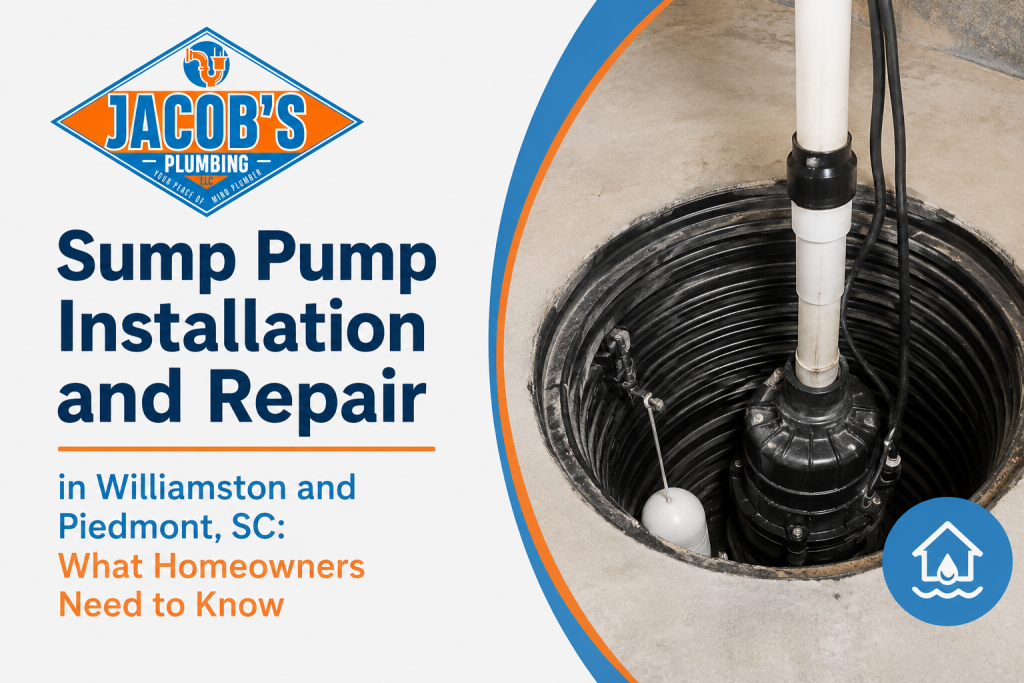
The concept is simple. A sump pit (also called a sump basin) is installed at the lowest point of your crawl space or basement floor. As groundwater rises or surface water seeps in, it flows by gravity into the pit. When the water level in the pit reaches a set height, a float switch activates the pump, which pushes the water through a discharge pipe and away from the foundation.
The discharge pipe routes the water to a safe location, typically to a drainage area in the yard at least 10 to 20 feet from the house, a storm drain, or a dry well. The goal is to get the water far enough from the foundation that it doesn’t cycle back.
Most residential sump pumps run on standard household electricity, though battery backup systems are available and highly recommended. The worst time for a sump pump to lose power is during a heavy storm, which is also the most likely time for a power outage. A battery backup keeps the pump running when you need it most.
Why Williamston and Piedmont Homes Need Sump Pumps
Several factors specific to this area make sump pump installation especially important.
Clay soil. Anderson County and the surrounding Upstate region sit on dense clay soil that absorbs water slowly and holds it near the surface. During heavy rain events, this saturated clay creates hydrostatic pressure against your foundation walls and floor. That pressure forces water through any available gap. We’ve covered how clay soil affects plumbing in a separate post, and the same soil dynamics that damage buried pipes also drive water toward your foundation.
Crawl space construction. Many homes in Williamston and Piedmont were built with vented crawl spaces, which are particularly vulnerable to moisture accumulation. Standing water in a crawl space promotes mold growth, wood rot in floor joists and subflooring, pest infestations, and musty odors that permeate the living space above. A sump pump paired with proper drainage keeps the crawl space dry and protects the structural integrity of your home.
Seasonal storms and heavy rainfall. Upstate South Carolina experiences intense rain events, especially during spring and summer. A single heavy storm can dump several inches of rain in a few hours, overwhelming natural drainage and sending water directly into low-lying crawl spaces and basements.
Proximity to creeks and low ground. Properties near Eighteen Mile Creek, Big Creek, and other waterways in the Piedmont and Williamston area are especially prone to water table fluctuations that push groundwater up through the soil and into your crawl space, even when it hasn’t rained recently.
Signs Your Existing Sump Pump Needs Attention
If your home already has a sump pump, it requires periodic maintenance and eventual replacement. The average sump pump lasts 7 to 10 years, depending on how frequently it runs and how well it’s been maintained. Here’s what to watch for.
The pump runs constantly or cycles on and off rapidly. This usually means the float switch is stuck, the check valve on the discharge line has failed (allowing water to flow back into the pit), or the pump is undersized for the volume of water it’s handling.
Strange noises during operation. Grinding, rattling, or thumping sounds indicate worn bearings, a damaged impeller, or debris caught inside the pump housing. A healthy sump pump should run relatively quietly.
The pump doesn’t activate during heavy rain. If water is rising in the pit and the pump isn’t turning on, the float switch may have failed, the motor may have burned out, or there could be an electrical issue. Test your sump pump before storm season by pouring water into the pit and confirming the pump activates.
Visible rust or corrosion on the pump body. Corrosion weakens the housing and can cause internal components to fail without warning.
Water in the crawl space despite having a pump. If water is still accumulating even though the pump is running, the system may need a second pump, a larger capacity unit, or additional drainage channels directing water to the pit.
If you notice any of these signs, it’s worth having a licensed plumber evaluate the system before the next heavy rain puts it to the test.
What Sump Pump Installation Involves
For homes that don’t currently have a sump pump, installation includes several steps. The plumber identifies the lowest point of the crawl space or basement where water naturally collects. A sump pit is excavated and a basin is set into the floor. The pump is installed inside the basin with the appropriate float switch configuration. A discharge line is routed from the pump through the foundation wall to a safe exterior drainage point. A check valve is installed on the discharge line to prevent backflow. The system is connected to power, tested, and a battery backup is installed if desired.
For residential plumbing in older homes, the installation may also involve adding perimeter drainage channels inside the crawl space to direct water toward the sump pit from all areas, not just the immediate vicinity of the pump.
Sump Pump Maintenance
Once installed, a sump pump needs minimal but consistent maintenance to stay reliable. Test the pump every few months by pouring a bucket of water into the pit. Clean the pit annually to remove debris, sediment, and gravel that can clog the pump intake. Inspect the discharge line for clogs, especially the exterior outlet, where dirt, leaves, and ice can block the flow. Check the battery backup system and replace batteries according to the manufacturer’s recommendation. Verify the check valve is functioning by listening for water falling back into the pit after the pump shuts off. If you hear a rush of water flowing backward after each cycle, the check valve needs replacement.
These tasks take a few minutes and can prevent the pump from failing during the one storm when you need it most.
Sump Pumps and Your Plumbing System
A sump pump protects more than just your crawl space. Excess moisture under your home accelerates corrosion on exposed water lines, drain pipes, and gas connections. Standing water can also undermine the soil supporting your sewer line, contributing to the bellies and joint separations that lead to sewer line problems. Keeping the space dry extends the life of your entire plumbing infrastructure.
At Jacob’s Plumbing LLC, we install, repair, and replace sump pumps for homeowners in Williamston, Piedmont, Pelzer, and Greer. We’ll assess your crawl space or basement, recommend the right pump size and configuration for your situation, and install it properly so it protects your home for years to come.
The Federal Emergency Management Agency (FEMA) notes that just one inch of floodwater in a home can cause more than $25,000 in damage. A sump pump is one of the most cost-effective ways to protect your property from that kind of loss.
Need a sump pump installed or repaired in Williamston or Piedmont, SC? Call Jacob’s Plumbing LLC at (864) 318-3285. We’ll keep your crawl space dry and your home protected.