How the two types deliver hot water
A tank heater stores hot water in an insulated cylinder and replaces it as you use it. A tankless heater has no cylinder: it heats water as it passes through a heat exchanger, and it stops when the tap closes. The difference sounds small until a household asks for hot water from several fixtures at once, which is where the two designs separate.
A tank loses some heat through its walls even when no one is using water, and it reheats to replace that loss. A tankless unit avoids standing loss because there is no stored water to keep warm. For a home that uses small amounts of hot water throughout the day, that difference is part of the running-cost picture. For a home that draws a large amount once a day, it matters less.
A tank’s limit is how much hot water it holds and how fast it can reheat. A tankless unit’s limit is flow rate, the number of gallons per minute it can heat at once. Both are real limits, and neither is a matter of brand or quality. The right question is which limit a household is more likely to run into.
What the unlimited label means
The phrase is misleading. A tankless heater never runs out of stored hot water because it stores none, so a long shower can continue as long as the unit keeps up with the flow. If a second shower or a dishwasher opens at the same time, the total flow can pass the unit’s capacity and the temperature at each fixture drops.
For a one-bathroom home with a single user at a time, that difference rarely appears. For a household with two showers running in the morning, a tankless unit has to be sized for the combined flow, or the fixtures have to be managed. A tank with a sufficient first hour rating handles the same morning differently, by emptying its reserve and then recovering.
Flow rate and the fixtures that compete
Every fixture has an expected flow. A shower head, a kitchen faucet, a dishwasher and a washing machine all draw at the same time when a house is busiest. A tankless unit is selected against that combined number, adjusted for how cold the incoming water is, because colder water needs more heating power to reach the same temperature.
The incoming water temperature does a lot of quiet work in that calculation. Ground water is colder in winter, so a unit that keeps up in summer can fall short in January at the same flow. A tank has the same issue from the other side: colder incoming water means a longer recovery between showers, which is why the season changes how a storage heater performs.
This is where an honest sizing conversation matters. A unit chosen for a mild climate or a smaller household can disappoint in a home where several fixtures run at once. Adding a recirculation line or a small storage tank can soften the difference, but those are design choices with their own trade-offs, not fixes applied after installation.
Space, venting and the work around the unit
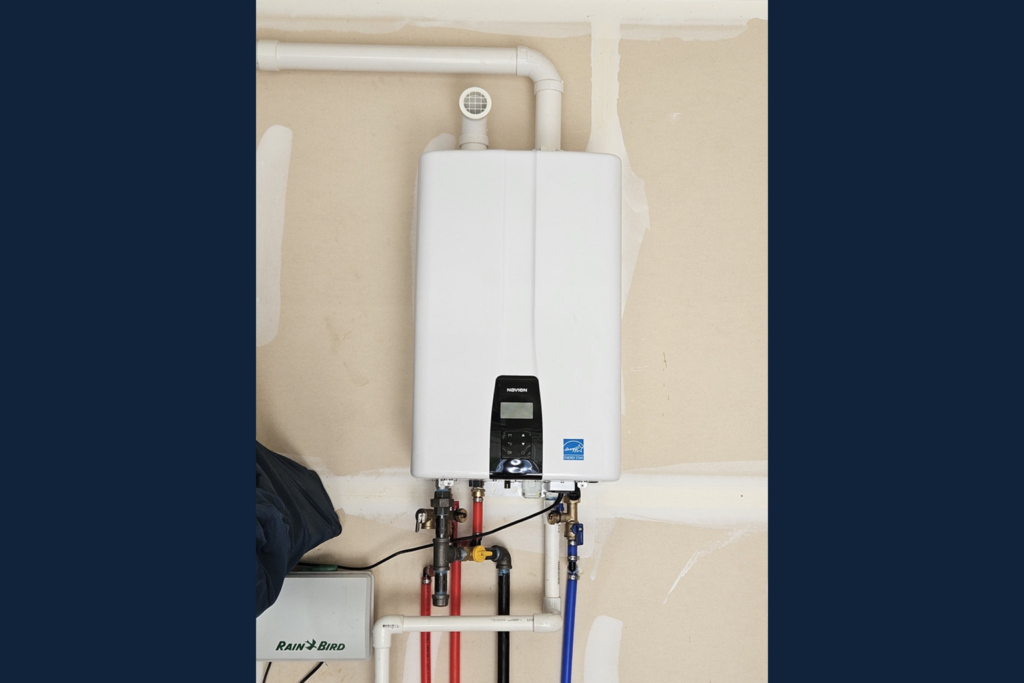
Tankless units free up floor space, which is often the reason they are chosen for a basement laundry corner or a closet. The trade-off is that the installation work can be larger than the unit itself. Gas piping may need to be increased, the vent may need a different path, and a condensing unit produces condensate that has to drain somewhere.
Where the unit goes is its own decision. An outdoor installation avoids vent runs but exposes the unit to weather and to freezing condensate. An indoor closet needs combustion air and a vent path that meets code. A garage space can work if the unit is protected and the condensate drains correctly. None of these are afterthoughts, because they change the work the project needs as much as the equipment choice does.
A tank replacement usually reuses the existing gas line, vent and water connections, though not always. A tankless conversion can touch the gas supply, the venting, the electrical service for a condensing unit, and the wall or platform that supports the unit. A tankless water heater service starts with those checks because they decide whether the project is a straight swap or a larger job.
Maintenance on each type
A tank heater needs its sediment flushed and its anode checked. A tankless heater needs descaling, because minerals collect inside the heat exchanger the same way they collect on a tank floor, and the passages are narrower. In an area with hard water, that descaling schedule is not optional if the unit is expected to keep its rated flow.
Scale shows up as reduced flow and uneven temperature rather than as a leak. A tankless unit that used to keep up with two fixtures and now struggles is often scaling, not failing. Descaled on schedule, the same unit can return to its rated performance. Left alone, the scale hardens and the recovery gets slower each season.
Both types benefit from a periodic look at the connections, the relief valve and the venting. Neither is maintenance free, and a homeowner who ignores the service schedule will usually see the cost in reduced performance rather than in a sudden failure. A water heater service visit covers the inspection and the flush or descale the unit needs.
Which home fits which heater
A tank fits a home with predictable demand, a reasonable place for the cylinder, and plumbing that already suits a storage unit. It also fits a house where several people draw hot water at the same time and the flow would be difficult to serve with a single tankless unit. In those homes the tank’s reserve is an advantage, not a compromise.
A tankless fits a household that values space, uses hot water in smaller bursts, and can support the venting and gas work the installation needs. It also suits a home where a long shower is the main demand and the rest of the fixtures are used separately. The decision follows the household’s habits more than the marketing category.
There is also the question of how the home is likely to change. A house that may gain a bathroom, a second washer or a finished basement is not a good candidate for a unit sized to today’s fixtures. Looking ahead a few years is part of getting the choice right, and it belongs in the first conversation rather than in a callback after the unit is installed.
What to settle before a quote
Before comparing units, write down the number of bathrooms, the fixtures that run together, how many people live in the home and where the current heater sits. Note the fuel type, the vent path and whether the water is hard. Those facts let a technician size the unit against real demand instead of a rough rule based on square footage.
Photos help more than descriptions. A picture of the current heater, the vent, the gas line and the space around the unit gives a technician the same view a site visit would. That shortens the conversation and reduces the chance that a quote is built on an assumption about the install that does not match the house.
It also helps to decide what the household wants to change. A family that is adding a bathroom is solving a different problem than a homeowner who wants the laundry closet back. A conversation about the layout and the demand comes before a recommendation, and it usually makes the choice between tank and tankless clearer.
One more useful detail is the current unit’s age and service history. A tank that has been flushed each year has a different outlook than one that has never been serviced, and that history affects whether the replacement conversation is urgent or can be planned.
Frequently Asked Questions
Is tankless hot water really unlimited?
No. A tankless heater has no stored water to run out of, but it can only heat as much flow as its rating allows. When several fixtures draw at once, the combined flow can exceed the unit’s capacity and the temperature at each tap falls. The limit is flow, not tank size.
Will a tankless water heater work in an older Pelzer home?
It can, but the house has to support it. The gas supply, vent path, electrical service and water quality all affect whether a tankless unit can be installed and sized correctly. In an older home those checks decide the project more than the unit’s specifications do.
Which type costs less to run?
It depends on how the home uses hot water, the fuel and the local rates. A tankless unit avoids standing losses from a stored cylinder, while a tank can be simpler and use less energy in a household with steady demand. The answer comes from the household’s pattern, not from the category alone.
Do tankless water heaters need more maintenance?
They need different maintenance. A tankless unit has to be descaled because minerals collect in the heat exchanger, and the passages are narrow enough that scale reduces flow. A tank needs sediment flushing and an anode check. Both schedules matter, and hard water makes the tankless one more important.
Can one tankless unit serve two showers at once?
It can when it is sized for the combined flow and the incoming water temperature. Two showers plus a dishwasher or a washing machine can exceed a unit that would serve a single shower comfortably. The combined flow and the coldest incoming water are what a sizing calculation uses, not the number of bathrooms alone.
How long does a tank or tankless heater last?
Tankless units have no tank to corrode, which is one reason they may last longer than a storage heater. Water quality, maintenance and installation quality decide the real life of either type. A neglected tank can fail early, and a tankless unit with scale build-up can lose performance long before the end of its service life.
Talk through the choice
If the current heater is near the end of its life, the decision is easier with the house details in hand. contact Jacob’s Plumbing and share the number of bathrooms, the fixtures that run together and where the heater sits, so the conversation starts from the home rather than the category.